Substack · Deep-diveRavi Mehta
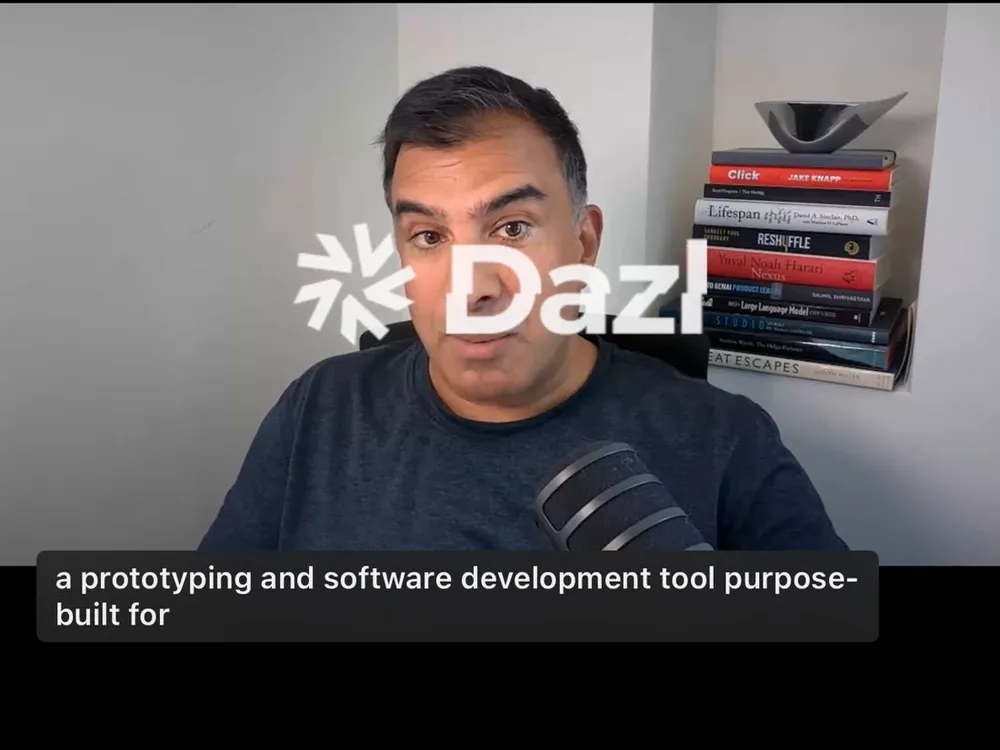
“Turn product guessing into product validation”
The long-form essay and deep-dive video — the anchor asset every other placement was cut from.
Read on Substack →Case study · Dazl · 2026
An influencer-marketing invoice mostly buys things you can’t see on it. The reporting and scheduling are the thin slice. The strategy, the briefs and hooks, the judgment, and the read on what the numbers mean — that’s the work. Here is one real campaign, scrappy start to finished assets.
The short answer
Resonant ran an end-to-end creator campaign for Dazl, a spec-driven AI prototyping tool, with two product-leadership creators, Ravi Mehta and Dan Olsen. One Substack deep-dive was cut down across LinkedIn video, X, and a 21,000-member Slack community. Seven organic placements produced 35,000–40,000 impressions, 15,000–20,000 people reached, and 35–40 hours of watch time — with roughly half the audience in software, tech, or IT, and three-quarters at 11–500-person companies.
01 — The results
Figures are banded — the exact per-post counts belong to the client and the creators. Everything below is organic, before any paid amplification, in a deliberately narrow product-management niche.
35–40k
Impressions
Across every organic placement — two LinkedIn feeds, a LinkedIn group, X, and a 21,000-member Slack community.
15–20k
People reached
Unique members, not impressions. Roughly half of them sat in software development, tech, or IT services.
12–15k
Video views
About a third of all impressions turned into a video view — a ratio that held steady across both creators.
35–40
Hours watched
Cumulative watch time. How long people stayed is what separated the two posts below.
About half
of the audience sat in software development, technology/internet, or IT services — squarely the market Dazl sells into.
Roughly three-quarters
worked at companies of 11–500 people: the startup-to-scale-up band where a PM can adopt a tool without a procurement cycle.
Nearly eight in ten
were senior or entry-level individual contributors — the hands-on PMs who pick their own tooling rather than approve someone else’s.
Named engineering orgs
showed up in the reached audience — Atlassian, Google DeepMind, GitHub, Wix — alongside Dazl’s own team.
02 — How it came together
A quarter of sustained presence, three time zones, and a long tail of decisions that never appear on an invoice.
Dazl × Resonant
how it actually came together
seven placements · released in waves · three time zones
Discovery & strategy
Working sessions to turn a vague goal into a campaign with a shape: audience, deliverables, attribution.
Their first angle wouldn’t have landed. We reframed it before a dollar was spent.
Sourcing & briefing
Two creators matched to the audience, vetted, and briefed on the product until they could speak to it for real.
Contracting & rights
Agreements, usage rights, IP, cross-border payments. We’re the single point of contact for all of it.
Get the rights wrong and the asset becomes a liability.
Concept & creative
Concepts, revision rounds, edits across formats, every asset kept pointed at the strategy.
Most of the work, and most of the judgment, lives here.
Launch & amplification
A waterfall rollout across every format, then paid boosting alongside the client’s media agency.
We caught missing UTMs before go-live that would have broken attribution for the whole launch.
a real exchange from the project
Looks great, but it reads like a blog post, not a landing page. A soft CTA won’t drive sign-ups, will it?
14:02On purpose. Host it on your domain and you own the traffic, retarget every click from LinkedIn, and it builds your search visibility.
14:09A hard CTA backfires on LinkedIn. We want the hand-off to feel organic. Easy to add a top-of-page button if you’d rather.
14:09Makes sense. Let’s keep it.
14:25This is what you’re paying for: the reasoning behind the asset.
03 — What we shipped
The Substack deep-dive was the anchor. Everything else is that same argument, re-cut for where a different slice of the audience reads.
“Turn product guessing into product validation”
The long-form essay and deep-dive video — the anchor asset every other placement was cut from.
Read on Substack →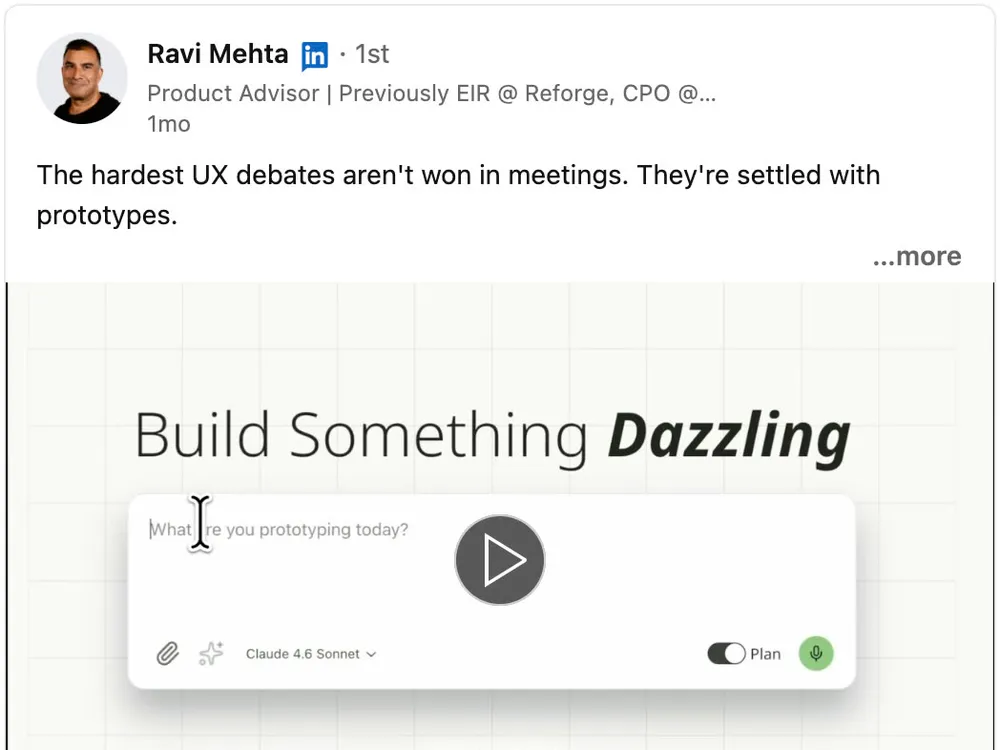
“The hardest UX debates aren’t won in meetings.”
The long-form piece, cut down for social. The reach engine of the campaign.
View on LinkedIn →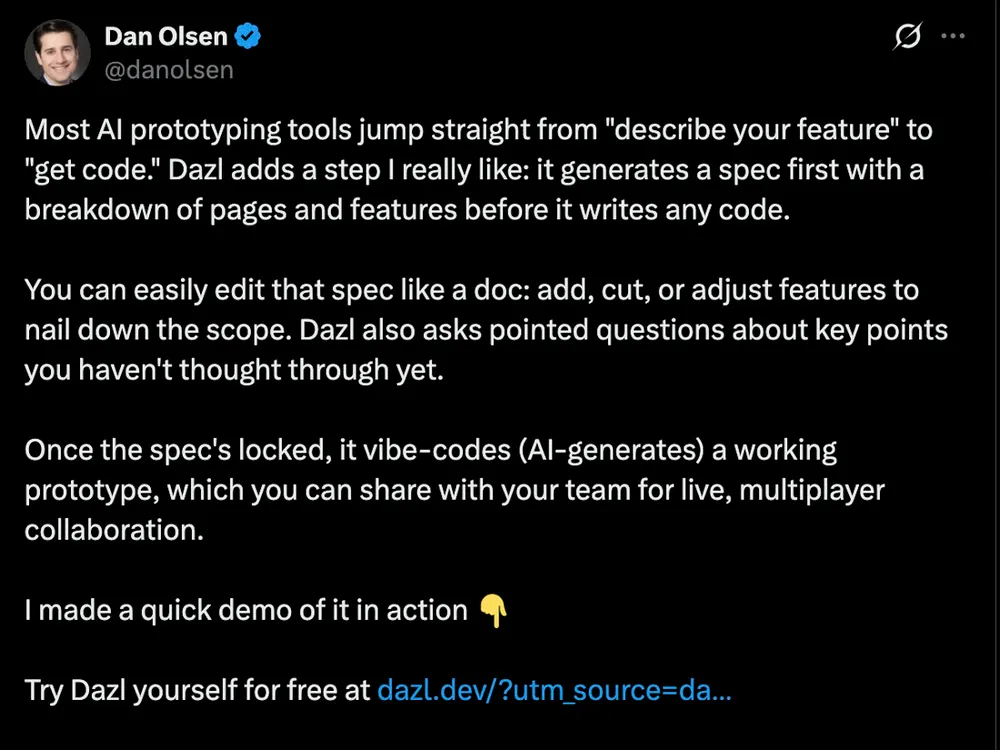
The same story, cut for a different audience — with the tracked link baked in.
View on X →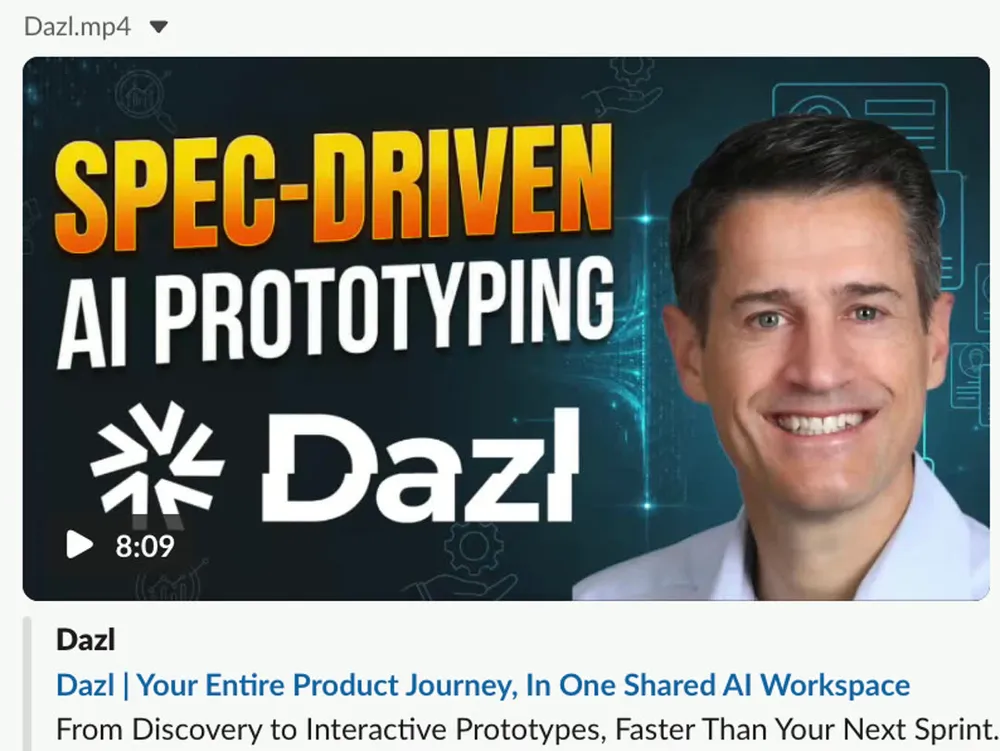
The eight-minute product walkthrough, dropped straight into the room where the buyers already talk to each other.
Shared in a PM community on Slack with 21,000 members
Two creators, four channels, all cut from the same anchor asset.
04 — The read
Both creators posted the same argument to LinkedIn. A dashboard ranks them one way. The campaign read them the other way.
| Post | Share of impressions | Avg watch | Engagement rate |
|---|---|---|---|
| The broad-reach post | ~90% | Under 10s | ~0.2% |
| The narrow, on-audience postWinner | ~7% | 20s+ | ~2% |
A dashboard ranks the broad post first: it carried about nine in ten of the campaign’s impressions, more than ten times the narrow post’s. But the narrow post held attention twice as long and engaged its audience at roughly ten times the rate, because nearly everyone who saw it was the buyer. Same argument, same week, same platform.
So the move is to keep the broad post for top-of-funnel and branded-search lift, put budget behind the narrow post’s creator and format, and stop optimising for views. That reallocation is worth more than any screenshot.
05 — What you’re paying for
They show up in every campaign we run, in the same order.
01 · Messaging lens
A stronger sense of what will convert than the brand or the creator has alone.
02 · Creator selection
Creators chosen for audience fit and depth, not follower count.
03 · Experimentation
Hooks and formats designed so the campaign tells you what worked, and why.
04 · Orchestration
Briefing, contracting, rollout, and amplification, across three time zones.
05 · Interpretation
What the figures say about your buyer, and what to do next.
06 · Less to own
The whole load handled, so you stay on the product.
06 — In-house
You can do all of this. The question is whether it’s the best use of your team, and whether you’ll catch the things that only show up once.
Every one of these happened, or nearly happened, on the campaign above. Most you’d never see, because catching them is the job.
“Ops” was never the product. The product is the strategy that set the angle, the judgment in every concept and contract, the orchestration that held a multi-wave launch together. Then the read that turns a flat dashboard into a decision.
— The bottom line
Common questions
Let’s talk strategy. We’ll walk you through what this looks like for your category.